
WHY STAY IN Tulsa
Lower-cost American remote work with room to breathe.
Tulsa offers low U.S. living costs, good internet, a growing remote-work identity, Art Deco character, and practical city services without coastal pricing.
City Insights for Tulsa
Is Tulsa Right for You?
Who this city is perfect for
Tulsa is an excellent choice for remote workers, families, entrepreneurs, healthcare professionals, engineers, aerospace employees, and anyone looking to maximize housing value without giving up urban conveniences. It is especially attractive to professionals seeking a slower pace of life, lower living costs than major U.S. metros, and access to growing industries while maintaining a comfortable lifestyle. The city also remains popular among relocators eligible for programs such as Tulsa Remote.
Who should avoid this city
Tulsa is less suitable for people who expect dense urban living, comprehensive public transportation, vibrant nightlife every night of the week, or constant international connectivity. Those who dislike driving, frequent summer heat, or severe weather risks may find daily life less appealing. Professionals whose careers depend on large global corporate headquarters or extensive international travel may also prefer larger metropolitan areas.
Best neighborhoods
Brookside offers walkable restaurants, cafés, and local character. Cherry Street is known for its vibrant dining scene and historic homes. South Tulsa provides modern master-planned communities, shopping, and family-friendly neighborhoods. Midtown combines mature trees, classic architecture, and central convenience, while Jenks remains one of the region's most popular suburbs thanks to highly rated schools, newer housing, and easy access to the Arkansas River corridor.
What You Should Know
Remote work reality
Tulsa has become one of the United States’ strongest secondary cities for remote workers. Reliable fiber broadband, expanding coworking options, affordable housing, and low traffic compared with larger metros create an excellent environment for hybrid and fully remote professionals. Many residents choose neighborhoods based on lifestyle rather than proximity to a traditional office, giving remote workers considerable flexibility.
Tax reality
Oklahoma applies a progressive state income tax alongside U.S. federal taxation. Property taxes remain relatively moderate compared with many coastal states, although homeowners should carefully evaluate insurance costs, particularly for weather-related coverage. New residents should also review residency requirements and overall tax planning before relocating.
Hidden considerations
Tulsa’s biggest advantage is balance. It combines the amenities of a midsize city with a pace of life that feels manageable rather than overwhelming. Residents often find they spend less time commuting and more time enjoying parks, restaurants, and neighborhood communities. While the city lacks the intensity of larger metros, many newcomers discover that this slower rhythm becomes one of Tulsa’s greatest strengths after settling in.
Healthcare notes
Tulsa offers excellent regional healthcare through systems including Saint Francis Health System, Ascension St. John Medical Center, and Hillcrest Medical Center. Residents have access to comprehensive specialist care, modern hospitals, and a strong regional healthcare network, making the city a medical hub for much of northeastern Oklahoma.
Visa Reality
International residents typically relocate through U.S. employment-based visas, family-sponsored immigration, investment programs, or student visas. Professionals relocating for work should ensure their immigration status aligns with federal employment authorization requirements before moving to Tulsa.
COST OF LIVING
Monthly Budget Min.
Monthly Budget Max.
Average Rent (1BR)
Food Cost
Transport Cost
Coworking Cost
Utilites Cost
Gym Cost
$2500
$4700
$1200
$650
$250
$180
$220
$45
Real cost breakdown
Tulsa delivers strong value compared with most major U.S. cities, but total ownership costs still deserve careful attention. Housing is generally affordable, although property taxes, homeowners insurance, maintenance on older homes, commuting costs, and weather-related upkeep can significantly affect monthly budgets. Newer suburban developments often reduce maintenance needs, while historic neighborhoods may require additional investment over time.
INTERNET
Avg. Internet Speed
Very Fast
Internet Notes
Tulsa benefits from extensive fiber broadband availability, expanding 5G mobile networks, and reliable internet infrastructure suitable for software development, cloud computing, video conferencing, and other bandwidth-intensive remote work. Digital connectivity is one of the city's strongest advantages for professionals working from home.
CLIMATE
Avg. Summer Temp.
Avg. Winter Temp.
Humidity
Rain
Sunshine
27.6
Moderate
High
High
Climate Notes
Tulsa has a humid subtropical climate with long, hot summers and generally mild winters. Spring and early summer bring the greatest risk of severe thunderstorms and tornadoes, while autumn is typically pleasant with comfortable temperatures. Residents enjoy abundant sunshine throughout much of the year but should remain prepared for rapid weather changes common across Oklahoma.
VISA
Visa Status
Visa Type
Long Stay Possible
Visa Required 90
U.S. ESTA or Tourist Visa
No
Visa requirements may vary depending on your nationality. The information provided here reflects the general visa conditions of the country.
MORE INFO
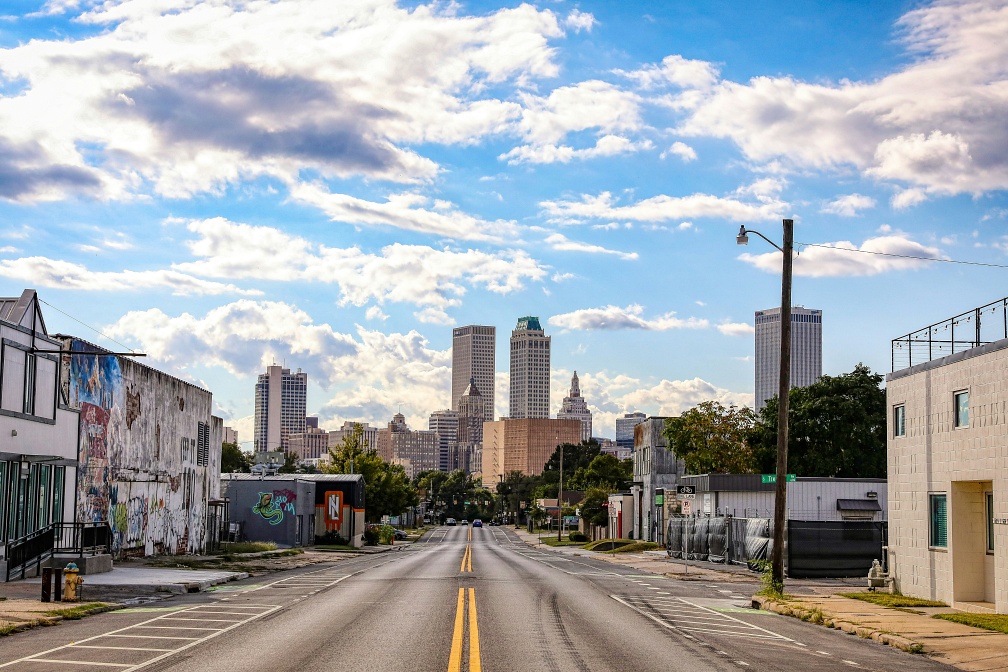
Tulsa is one of the more practical lower-cost U.S. cities for remote workers who want space, affordability, and strong basic infrastructure. It has a growing remote-work reputation, an improving downtown, Art Deco architecture, music history, good healthcare, and access to parks and trails. It is car-dependent and not a major global city, and safety varies by neighborhood. For U.S.-based workers, Tulsa can offer a strong cost-quality balance; for foreign nomads, U.S. visa limits remain a major barrier.
Need help moving to Tulsa?
Compare trusted relocation providers for visas, housing, tax, moving and healthcare.
Tulsa
USA / North America
6.9
BEST FOR
Budget, Business, Nomad
Lifestyle & Environment
QUICK FACTS
Safety
Internet
Tax
Visa
Climate
Healthcare
: Less Safe
: Very Fast
: Moderate
: Visa Required
: Warm
: Excellent
travel tools
Smart travel setup for Tulsa
Skip hours of research — here’s exactly how to plan your stay.
Best areas to stay
Downtown, Cherry Street, Brookside, Maple Ridge
<p style="text-align: justify">Cherry Street and Brookside are best for cafes and lifestyle, while downtown is more convenient for coworking and events.</p>
View best stays →Mobile internet setup
Cox, AT&T Fiber, or local fiber where available
Check exact address coverage because U.S. broadband quality varies block by block.
Check eSIM →Best way to fly in
Tulsa International Airport is convenient domestically, with major hubs needed for long-haul routes.
Dallas, Denver, Chicago, and Atlanta connections can expand options.
Find flights →Travel insurance
Comprehensive U.S.-valid health insurance is essential.
Medical care can be expensive without coverage, even for routine emergencies.
Get covered →Best first week plan
Gathering Place, Art Deco downtown, Route 66 sites, Cain’s Ballroom, Cherry Street, Philbrook Museum, local breweries
Explore →