
WHY STAY IN Tripoli
A historic Mediterranean capital under severe security constraints.
Tripoli remains Libya’s political and commercial center, relevant mainly for essential diplomatic, reconstruction, energy, and humanitarian assignments.
City Insights for Tripoli
Is Tripoli Right for You?
Who this city is perfect for
Tripoli is best suited for professionals relocating through oil & gas companies, diplomatic missions, NGOs, engineering firms, and international organizations with employer-sponsored housing and stable foreign income. It is also attractive to investors evaluating North African markets where everyday expenses remain exceptionally low by global standards.
Who should avoid this city
Tripoli is not a good fit for digital nomads, freelancers relying on the local economy, or expatriates expecting a diversified private-sector job market. Anyone planning to relocate without a secure income should carefully consider the disconnect between low prices and relatively weak local earning power.
Best neighborhoods
Hay Al Andalus is among the city's most desirable residential areas, offering modern apartments and a growing expatriate community. Gargaresh combines residential living with restaurants and commercial services. Ben Ashour provides convenient access to central Tripoli, while Downtown Tripoli remains the administrative and financial heart of Libya with government offices, banks, and corporate headquarters.
What You Should Know
Remote work reality
Internet services are inexpensive by international standards, with unlimited 60 Mbps+ broadband costing approximately 166 LYD/month, while mobile plans including calls and 10GB+ of data average 39 LYD. The pricing makes connectivity affordable, although actual service quality, infrastructure reliability, and power stability should be verified before depending on Tripoli for full-time remote work.
Tax reality
Libya’s economy remains overwhelmingly dependent on hydrocarbons, and foreign professionals should obtain specialist tax advice before relocating. Employment structures, tax obligations, and compensation packages vary considerably between government institutions, international organizations, and foreign energy companies operating in Libya.
Hidden considerations
Tripoli’s biggest advantage is also its biggest contradiction. Despite being one of the world’s cheapest cities, the median after-tax salary is only about $312, covering just 0.7 months of average living expenses. Libya generated approximately 14 billion LYD from oil exports during the first two months of 2025, yet reports indicate virtually no development or emergency fund spending, highlighting the gap between national oil wealth and everyday living standards. While real GDP is projected to grow by 13.3% in 2025 (with the oil sector expanding 17.4%), the broader non-oil economy is expected to grow only 6.8%, limiting improvements for many residents.
Healthcare notes
Healthcare costs for basic medicines remain low—a week’s supply of common cold medication costs roughly 4.62 LYD—but comprehensive healthcare infrastructure varies significantly. Most expatriates rely on employer-provided private healthcare plans and international evacuation insurance for specialist treatment outside Libya when necessary.
Visa Reality
Most foreign nationals require a Libyan visa before arrival, with longer stays generally requiring employer sponsorship, work authorization, residence documentation, or another approved immigration pathway. Entry procedures may change depending on nationality and current government regulations, so documentation should always be confirmed before relocation.
COST OF LIVING
Monthly Budget Min.
Monthly Budget Max.
Average Rent (1BR)
Food Cost
Transport Cost
Coworking Cost
Utilites Cost
Gym Cost
$3000
$7000
$2200
$700
$260
$60
$190
$40
Real cost breakdown
Tripoli is one of the world’s most affordable major cities, ranking 8,852 out of 9,294 cities globally, placing it among the top 5% least expensive cities worldwide. A family of four spends approximately $1,378 (7,483 LYD) per month excluding rent, while a single adult requires around $374 (2,030 LYD). City-center one-bedroom apartments average just $126/month, with larger three-bedroom apartments around $376/month. Utilities cost approximately 155 LYD monthly for a standard apartment, or around 264 LYD for an 85 m² family home. A family typically spends about $480/month on groceries. Bread costs 1.29 LYD, milk 5.67 LYD/L, eggs 8.17 LYD/dozen, tomatoes 1.52 LYD/lb, and chicken fillets around 9.36 LYD/lb. Restaurant prices remain affordable, with a casual meal averaging 25 LYD and a three-course dinner for two around 100 LYD. Public transport costs just 1.5 LYD per trip, monthly passes average 72.5 LYD, taxis start at 5 LYD, and fuel remains heavily subsidized at only 0.15 LYD per liter.
INTERNET
Avg. Internet Speed
Slow
Internet Notes
Broadband pricing is among the city's strongest value propositions, offering 60 Mbps or faster unlimited connections for around 166 LYD/month. Mobile packages remain inexpensive, making dual connectivity practical for professionals, although backup internet solutions are recommended where uninterrupted connectivity is business-critical.
CLIMATE
Avg. Summer Temp.
Avg. Winter Temp.
Humidity
Rain
Sunshine
27.7
15
Moderate
Low
Very High
Climate Notes
Tripoli has a Mediterranean climate characterized by long, hot, dry summers and mild winters. Sunshine dominates most of the year, while rainfall is concentrated during the cooler months. Coastal breezes moderate temperatures compared with Libya's interior, making the city noticeably more comfortable than inland desert regions despite intense summer heat.
VISA
Visa Status
Visa Type
Long Stay Possible
Libya Visa and Prior Authorization Required
No
Visa requirements may vary depending on your nationality. The information provided here reflects the general visa conditions of the country.
MORE INFO
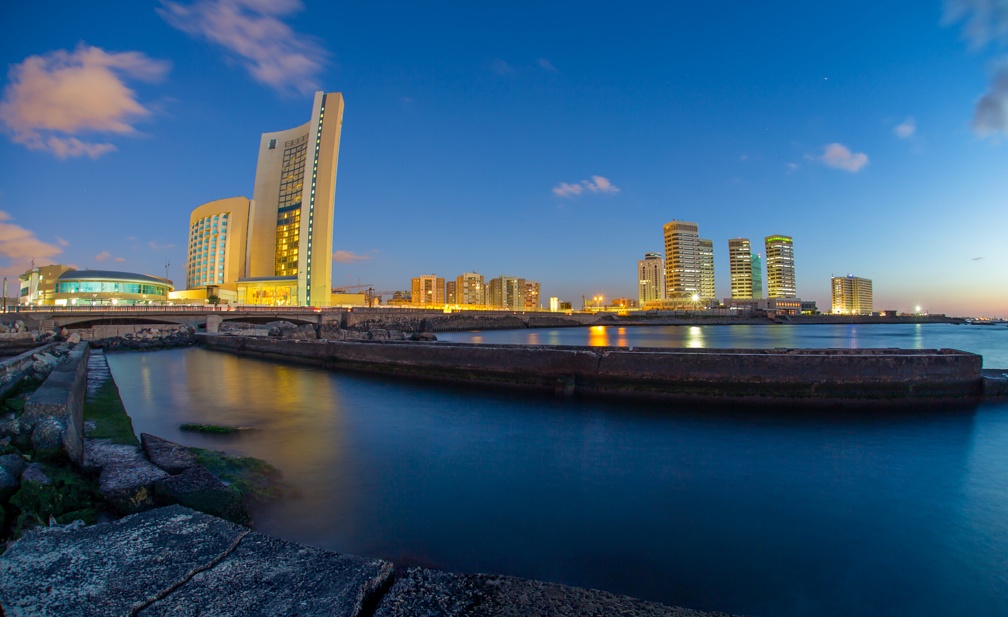
Tripoli is Libya’s capital and largest city, with a Mediterranean waterfront, historic medina, government institutions, ports, universities, and the country’s main diplomatic and commercial networks. Despite functioning neighborhoods and active daily life, the broader security environment remains highly unpredictable due to armed groups, political fragmentation, arbitrary detention, road insecurity, and sudden clashes. Foreign stays should be limited to essential, professionally supported assignments with vetted accommodation, secure transport, communications redundancy, and evacuation planning.
Need help moving to Tripoli?
Compare trusted relocation providers for visas, housing, tax, moving and healthcare.
Tripoli
Libya / Africa
5.16
BEST FOR
Business
Lifestyle & Environment
QUICK FACTS
Safety
Internet
Tax
Visa
Climate
Healthcare
: High Risk
: Slow
: Very Low
: Visa Required
: Hot
: Limited
travel tools
Smart travel setup for Tripoli
Skip hours of research — here’s exactly how to plan your stay.
Best areas to stay
Vetted secure compounds only
Accommodation should be arranged through an employer, embassy, international organization, or specialist security provider.
View best stays →Mobile internet setup
Multiple Libyan mobile networks plus satellite backup
Do not rely on a single commercial connection for critical communications.
Check eSIM →Best way to fly in
Mitiga International Airport and Tripoli International Airport operations can change rapidly.
Routes, airspace access, and schedules require current verification before every journey.
Find flights →Travel insurance
Specialist war-risk, medical evacuation, security, and kidnapping insurance is essential.
Standard travel policies commonly exclude Libya, armed conflict, and detention.
Get covered →Best first week plan
No ordinary tourism recommended; any movement should be mission-essential, locally approved, and security-managed
Explore →